

Ballymena man was ‘trusted friend’ to Hamilton and Washington
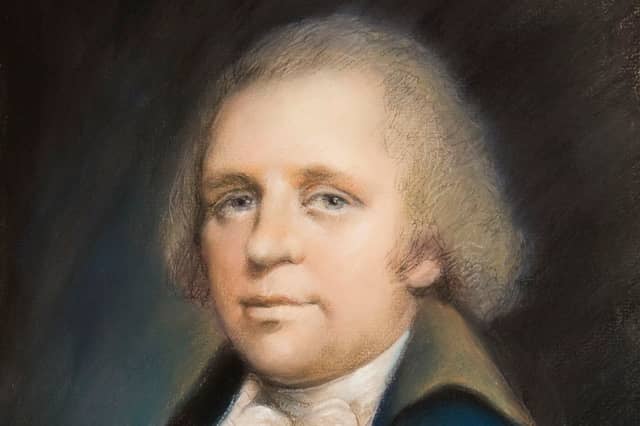

The remarkable life and times of the local Founding Father who befriended Presidents
ONE OF the most internationally recognised pieces of music ever written, the patriotic strains of ‘The Star Spangled Banner’, have echoed out as the official national anthem of the United States since 1931.
Penned by Francis Scott Key - who was inspired by the sight of the stars and stripes flag fluttering triumphantly amidst the ‘rockets red glare’ and ‘bombs bursting in air’ during the British bombardment of Baltimore’s Fort McHenry in 1814 - it is an iconic symbol of U.S national pride.
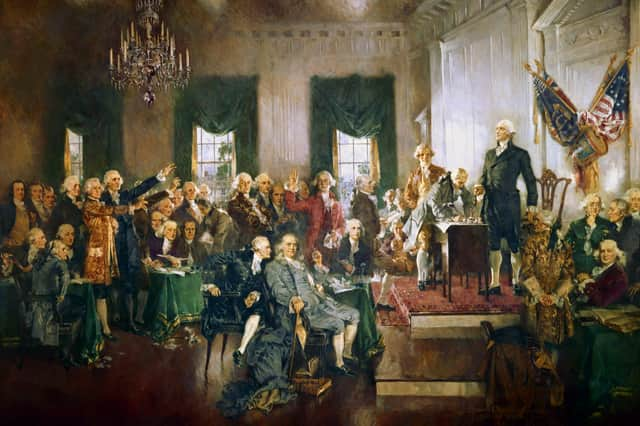
But did you know that Fort McHenry’s namesake was, in fact, a Ballymena-born man who rubbed shoulders with the likes of George Washington and Alexander Hamilton - and was one of the original signatories of the U.S Constitution?
Born into an Ulster-Scots Presbyterian family in Ballymena 273-years-ago last Monday, James McHenry’s early life was shaped by his voracious appetite for learning.
Indeed, such was the intensity of his study that it is recorded that his family allegedly became alarmed by it and felt it excessive. As such, in 1771, they sent the 18-year-old future surgeon to the United States.
Some historians make a case for a different motive - that the McHenry family were utilising him as an ‘advanced scout’ to gauge the living standards in the colonies to inform a decision as to whether or not to relocate the entire household.
In either event, they duly moved one year after James’ pioneering solo voyage.
Upon arriving in the States, McHenry initially lodged with a family friend in Philadelphia before completing his preparatory education at Newark Academy in Delaware.
Returning to Philadelphia, he later apprenticed under the renowned physician Benjamin Rush, qualifying as a medical doctor shortly before the American colonies erupted into revolution against British rule.
In what would eventually come to be known as the American War of Independence, the local physician put his medical training to immediate use. On August 10, 1776, McHenry was appointed surgeon of the Fifth Pennsylvania Battalion, stationed at Fort Washington in New York.
Implanted within the ranks of the Continental Army, danger came marching after him with haste and in November 1776, Fort Washington fell to British forces.
James was captured by the British the day after his 23rd birthday, and, while being held as a prisoner of war, the young doctor observed that captured American troops were receiving very poor medical attention.
He set about submitting formal reports complaining of the conditions, though his appeals went unheeded.
In March 1778, McHenry was released from British custody, and his canny intellect and dedication to the revolutionary cause - he was on the frontlines during the bloody but inconclusive Battle of Monmouth that June - soon caught the attention of the Continental Army’s commander-in-chief, one George Washington.
Impressed, Washington appointed the locally-born man to the dual positions of his aide and secretary in May 1779, where he served until transferred to the staff of the Marquis de Lafayette - with whom it is recorded he enjoyed a close friendship - until his retirement from military service in 1881.
A French aristocrat, Lafayette had aligned himself with Washington’s forces and was a crucial figure in lobbying for French support for the revolution.
He would go on to play a critical role in the decisive American victory over the British in the Siege of Yorktown in 1881.
Returning to civilian life in Maryland following the British eviction from the newly independent country, McHenry transitioned seamlessly from the battlefield to the chamber.
Elected by the legislature to the Maryland Senate on September 17, 1781, and chosen as a delegate to the Continental Congress on December 2, 1784, the Ballymena native found himself among the select present to sign the newly-drafted United States Constitution.
And so it was that a man from the Braid Valley cemented his place in U.S history as one of the so-called Founding Fathers.
During President George Washington’s second term in office, he appointed McHenry as the third United States Secretary of War on January 27, 1796. He immediately tasked the local man with facilitating the delicate transition of Western military posts from Great Britain’s control to that of the United States.
Perhaps his most enduring institutional legacy came on March 8, 1798, when McHenry formally recommended to Congress that the ‘War Department should be assisted by a commissioner of marine.’
This proposal is credited with establishing the modern day United States Department of the Navy.
When John Adams succeeded Washington as resident in 1797, he opted to keep the newly established presidential cabinet intact, retaining McHenry as Secretary of War.
However, deep political fissures soon emerged amongst the once-united former revolutionaries.
Adams came to discover that a number of his secretaries repeatedly opposed his policies - particularly regarding foreign relations with France - taking cues instead from Adams’ political rival, Alexander Hamilton.
While widely liked on a personal level, McHenry also began to draw criticism, with even Washington and Hamilton said to have complained of what was perceived as his growing incompetence as an administrator.
Following a stormy cabinet meeting in May 1800, Adams demanded McHenry’s resignation and, bitter over what he believed to be his unjust dismissal, the latter subsequently goaded Hamilton during the 1800 presidential election into releasing a scathing pamphlet attacking Adams’s loyalty and patriotism.
When the document leaked beyond its intended audience, the resulting public infighting helped pave the way for Thomas Jefferson’s ascension to the Presidency.
McHenry retired to Baltimore, where in 1792 he had purchased 95-acres of land from Ridgely’s Delight - naming his estate Fayetteville in tribute to his wartime friend, the Marquis de Lafayette.
Like many prominent landowners of the era, McHenry was a slaveholder. At the time of his death, he ‘owned’ ten slaves, most of whom worked as household servants or maintained his estate.
An attack of paralysis in 1814 left McHenry in severe pain and without the use of his legs, and he died at his Baltimore home two years later, on May 3, 1816, aged 62.
His widow, Peggy Caldwell McHenry, wrote of her husband upon his passing.
‘Here we come to the end of a life of a courteous, high-minded, keen-spirited, Christian gentleman.
‘He was not a great man, but participated in great events and great men loved him, while all men appreciated his goodness and purity of soul.
‘His highest titles to remembrance are that he was faithful to every duty and that he was the intimate and trusted friend of Lafayette, of Hamilton, and of Washington’.