

The days of David McWilliams - the Ballymena man who changed pop
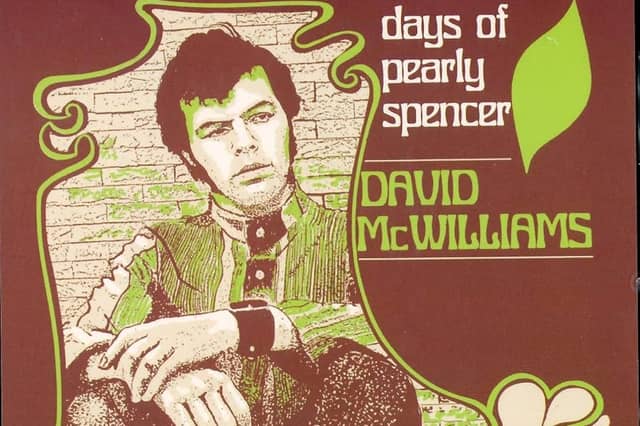

One of the biggest stars Northern Ireland produced was made in Ballymena!
IT remains a record that defines the hazy, crazy summer of 1967, when flower power was the rule of the day and Sgt Pepper taught the band to play.
As integral a stitch in the sonic tapestry of the so-called ‘Summer of Love’ as the likes of ‘A Whiter Shade of Pale’ by Procol Harum or ‘White Rabbit’ by Jefferson Airplane, David McWilliam’s enigmatic ‘Days of Pearly Spencer’ captivated European audiences with its hauntingly elegiac lyricism and the eerie distorted detachment of the ‘phoned-in’ effect on its chorus.
Running at only two and a half minutes or so long, the psychedelic folk classic would be the defining record of David McWilliam’s long career.
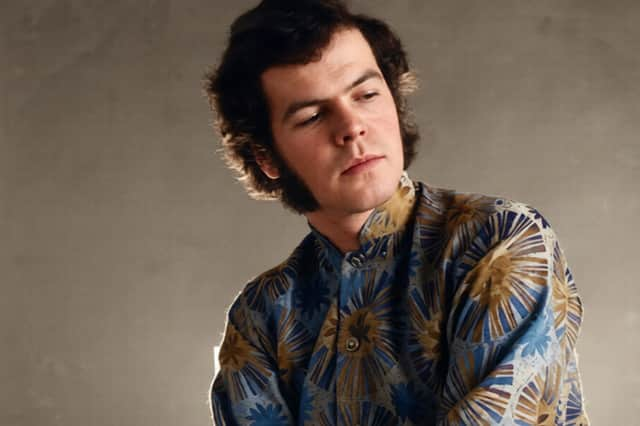
Few who bought the record back in the paisley-patterned late 1960s will have known, however, of the seminal single’s firm strong Ballymena roots.
After all, McWilliams- who moved to the town from the Cregagh area of Belfast when he was three-years-old- had penned the song after drawing inspiration from a homeless man he had befriended in Ballymena some years before.
The quiet, self-effacing local songwriter- who, in the words of the Irish Times, was ‘more at home playing in the Fourways Inn than in the Royal Albert Hall’- filtered his deep empathy for those living on the margins of society into his lyrics.
He was quoted as saying of his craft, "I listen with my eyes and I sing what I see."
And it shows. His timelessly atmospheric music still holds up today.
Spending his childhood in Green View in the town, David was one of seven brothers and sisters in the McWilliam household. After attending the Model School, he went on to the local technical college.
This, however, was short-lived, coinciding with the development of a burgeoning rebellious streak. He was suspended in 1960 when he was only 15 for drinking between classes, and, on his return, he played truant constantly, preferring to spend his days thinking up songs.
David was also a keen fan of local sports. Standing six foot tall and possessed of striking blue eyes and unruly dark hair, he cut a striking figure on the pitch, and with his tall frame he excelled at goalkeeping in particular.
As his lifelong friend Brian Robinson would later recall: “He was a very talented footballer. He played for Harryville Amateurs and Rectory Rangers with myself.
“At one stage he signed for Linfield, but just as he was being groomed for a regular place on team, he broke his ankle while playing football with us in People’s Park. That put an end to that for a few months."
David would even attract interest from scouts at Manchester United, but his untimely injury sidelined him for four months. By the time his ankle recovered, the young McWilliams was moving on.
The mid-1960s were a heady, transformative time for music in Northern Ireland. A vibrant local scene was caught between two interconnected cultural camps, with a regional showband circuit reaching its apogee and a raw, mod-influenced zeitgeist epitomised by the R&B of Van Morrison and Them cohabiting the cultural biosphere.
Scoring global hits like ‘Gloria,’ they were instrumental In bringing the sound of sweaty Belfast ballrooms to international attention.
Swept up in what has retrospectively been described as the ‘youthquake’ of the era, an ambitious David tried out for one of Ballymena’s premier showband outfit, The Cossacks, but he didn’t make the cut. Reflecting on the audition years later, Cossacks member Billy Swann remembered the encounter well:
"We interviewed Davy McWilliams but his style of song was more 'folky' and we were looking for more of a 'ballad' type singer. Jim Reeves, Andy Williams etc were very popular at that time,” the guitarist recalled.
“David McWilliams went on to become a recording star in his own right and had a hit with his own composition, 'The Days of Pearly Spencer'."
The Cossacks would go on to scale their own heights, sharing bills with the likes of Roy Orbison, Tom Jones and, most famously, supporting the Rolling Stones at the Flamingo Ballroom during their UK tour in July 1964.
Following in his father’s footsteps, David began an apprenticeship as a fitter at the torpedo factory in Antrim town, later working at the Shorts missiles factory, but his musical aspirations refused to be quashed by the realities of the factory floor.
Inspired by Sam Cooke and his industrial surroundings, he penned original compositions like ‘Redundancy Blues’ and ‘Time of Trouble,’ songs he brought to the table when he eventually joined the Coral Showband.
Around 1966, his friends Ronnie Holden and Brian Robinson took David to a Belfast studio to cut a four-track demo EP. Sound engineer Mervyn Solomon (whose brother, Philip Solomon, had managed Them) was behind the mixing desk.
Mervyn was a director of the pirate station Radio Caroline and the founder of the newly minted Major Minor Records and, on hearing David’s tape, he saw a star.
Whisked away to London, David was signed to Major Minor. He worked with arranger Mike Leander- the producer responsible for the production on Marianne Faithull’s ‘As Tears Go By,’ fresh from crafting the string arrangement for The Beatles' ‘She’s Leaving Home.’
‘Days of Pearly Spencer’ was released on the wave of an increasingly sophisticated music industry, shaped more and more by poetic, post-beatnik surrealism and L.S.D-fuelled escapism. It was a competitive market, and Solomon pulled no punches in publicising his new signing.
He took out full-page advertisements in publications like the New Musical Express that trumpeted his greatness- ‘the single that will blow your mind, the album that will change the course of music’, read one.
He even had adverts installed on the sides of double decker London buses. In the swinging city at the centre of the Sixties, David McWilliams was ubiquitous.
Glowing contemporary reviews in the music press heralded McWilliams as a phenomenal new songwriting talent, excitedly comparing his lyrical depth to Donovan and Bob Dylan.
Leander’s baroque orchestrations and David's delicate six and 12-string acoustic guitars had captured the attention of a pop audience entranced by the era’s dreamy psychedelic soundscapes.
Solomon used his influence with the pirate stations to ensure heavy airplay, with the song being plugged on the hour on Radio Caroline- yet, in one of the UK chart’s most notorious ironies, when BBC Radio 1 launched in September 1967, showrunners refused to add it to the playlist, largely because Radio Caroline had just been outlawed by Harold Wilson’s government under the Marine Broadcasting Offences Act.
Solomon’s fingerprints on McWilliam’s masterpiece denied it the chart success it clearly deserved.
In continental Europe, however, it was a different story. The single shot straight to number one in France - where the National Orchestra of France recorded a chart-topping instrumental version - while in Italy, fans swarmed McWilliams in the streets of Rome, literally tearing the shirt off his back in a frenzy not unlike the ‘Beatlemania’ of a couple of years earlier. In Holland, meanwhile, a chain of restaurants was even named ‘Candlelight’ after one of his tracks.
David Bowie, who had just released his debut album in June 1967 and was far from yet the household name he would become, was even once quoted by friends as stating that David McWilliams was his favourite songwriter.
Before 1967 was out, David had recorded three full solo albums of original material. Nonetheless, the international acclaim he was afforded never altered his grounded character.
A friend from Ballymena said at that time ‘it wasn't uncommon’ for David to return from being top of the bill on a European tour on a Friday night and be ‘playing football with his mates for Broadway Celtic on a Saturday morning’.
“He never believed he was a pop star, and he certainly never behaved like one."
Long-serving league official Brian Montgomery echoed this sentiment when discussing David's time with Broadway Celtic in the 1970–71 period, noting simply, ‘he was a useful player’.
The 1970s marked a harsh comedown from David’s commercial 1960s peak. Living in London, he was briefly managed by an associate of the notorious landlord Peter Rachman, a toxic entanglement that cost McWilliams an estimated £2 million in lost publishing rights and royalties.
He later bitterly evoked this period in his 1988 track ‘Landlord, Landlord,’ which featured the lyric, ‘for all the Rachmans of this world, we're gonna get ya’.
Circumstances notwithstanding, his natural warmth remained untouched. On one occasion at a party in London, he accidentally broke a prized Appalachian lap dulcimer belonging to comedian Billy Connolly.
Mortified, David asked how he could best make amends. Connolly simply smiled and replied that a copy of David’s latest album for his brother- who, it transpired, was a massive fan - would be more than adequate compensation.
Returning to Northern Ireland in the 1980s, David settled in Ballycastle. Though live appearances grew rare, he stepped up for causes close to his heart, performing a 1984 benefit concert for striking miners and later appearing at the Ballycastle Northern Lights Festival to celebrate Scottish and Irish folk traditions.
Brian Robinson recalled a moment when he was running a local basketball team in need of funds for children:
"I asked David to put on a concert at County Hall. He wasn't really fussed on doing it but agreed because I was a friend.
“The concert was a sell-out and brought the house down, but David didn't ask for a penny so that all the funds raised could go to the basketball team. That was the kind of man he was."
Chart success returned in 1992 - albeit indirectly- when former Soft Cell frontman Marc Almond recorded a version of ‘Days of Pearly Spencer’, taking the track, at last, to the British Top Ten. It would peak at Number 4.
Told by journalists in Ballycastle that his song was dominating the airwaves, David said, with characteristic modesty, "I don't know whether to be flattered or not. I've never had any interest in trying to write the sort of songs that might end up in the charts nowadays.
“To be honest I haven't even heard the version. Now that it's doing so well I'll have to listen out for it. Do they still have Top of the Pops?"
When David McWilliams passed away suddenly from a heart attack at the age of 56 in January 2002, tributes poured in from across the music world.
Former Wings guitarist Henry McCullough remarked: "It is a big shock, and so sudden. There are music fans all over the world who will be mourning David's death."
BBC presenter Gerry Anderson also paid his respects, describing him as a true home-bred original.
"There aren't too many of them around,” Anderson said. “Van Morrison is one and David was another."
Meanwhile, Terri Hooley of Good Vibrations vaulted him firmly amongst the finest of his peers, noting that the English had Donovan, the Americans (Bob) Dylan, we had McWilliams."
David McWilliams race may well be run, but the haunting strains of his music remain as a testimony to a local man who captured the fleeting essence of an era, all the while never losing the essence of himself. It’s only fitting that his most beloved masterpiece, a keenly observed vignette of time and place, is as grounded as the man who penned it.